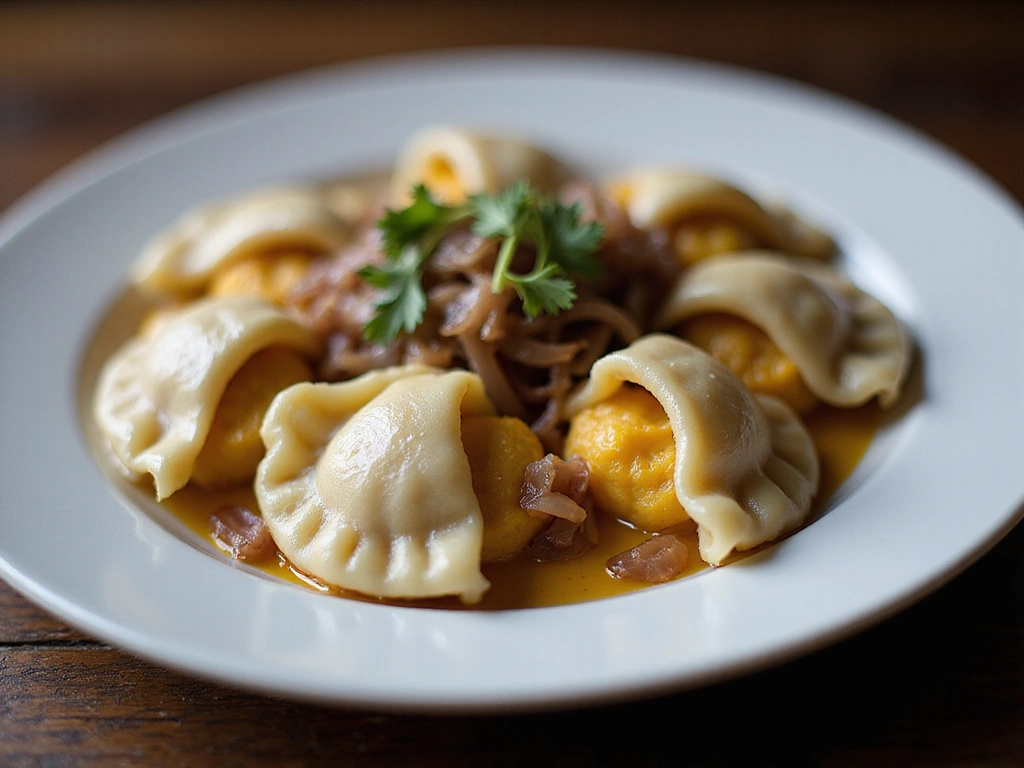
Onion & Cheddar Pierogi
Jump to RecipeWarm, comforting, and utterly satisfying, onion and cheddar pierogi bring the flavors of a cozy kitchen into your weeknight dinner or weekend feast. This easy pierogi recipe relies on simple pantry staples—pierogi dough, onion, cheddar cheese, butter, salt, and a dollop of sour cream—to deliver big flavor without fuss. The secret is slowly caramelizing the onions in butter to coax out their sweetness, then folding them into sharp cheddar for a savory filling that melts perfectly inside tender, chewy dumplings. When the dough is rolled to about 1/8 inch and the circles are cut, every bite delivers a balanced contrast between creamy cheese and sweet onion, wrapped in a delicate dough pocket. Follow the steps: sauté onions until golden, mix with cheddar and a pinch of salt, roll and cut the dough, spoon filling into the centers, seal tightly, then boil until they rise to the surface. A final kiss of sour cream adds tang and creaminess, turning each bite into a comforting, crowd-pleasing dish. Perfect for a savory brunch, a simple weeknight meal, or a make-ahead option for a festive gathering. This recipe invites home cooks of all levels to master homemade pierogi with confidence and delight.
Ingredients
pierogi dough
Dough tips: If you want quicker pierogi, use store-bought round dumpling wrappers as a substitute. For from-scratch dough, rest the dough 15–20 minutes after kneading to relax the gluten, then roll to about 1/8 inch thick and flour the surface well to prevent sticking. If dough is sticky, dust with a little more flour; to freeze assembled pierogi, place them on a tray to firm up before transferring to a bag. For gluten-free options, use a 1:1 gluten-free flour blend with a small amount of oil or water to achieve a workable consistency.
onion
Onions: Use yellow or sweet onions for milder flavor; to deepen sweetness, cook slowly until caramelized (low heat, 15–20 minutes). A pinch of sugar or a splash of balsamic can help browning. Chop finely for mixing with cheese, or slice for topping. If you want to speed things up, microwave chopped onions with a little butter for 2–3 minutes before finishing in the skillet.
cheddar cheese
Cheddar ideas: Use sharp cheddar for more pronounced flavor or mild cheddar for creamier filling. Grate finely to melt evenly. For extra creaminess and binding, blend in a small amount of cream cheese or use a mix of cheddar and Monterey Jack. If you want a different character, try Gruyère or smoked cheddar for a deeper, melted bite.
salt
Salt note: Use kosher salt for even seasoning and easier tasting. Since cheese and butter can contain salt, start with 1/2 teaspoon and adjust to taste. If you switch to salted butter, reduce additional salt accordingly.
butter
Butter tips: Use unsalted butter so you control salt level; for a lighter option, substitute with olive oil or a neutral oil. Browning the butter adds nutty flavor if you have time. For dairy-free versions, use a plant-based butter or oil. Keep the heat moderate to prevent burning.
sour cream
Sour cream ideas: Full-fat sour cream gives a classic tang; you can substitute with Greek yogurt (thick, strained) or crème fraîche for similar tang and richness. For dairy-free, use plant-based sour cream or yogurt. Let sour cream come to room temperature to soften when dolloping on hot pierogi, or whisk a tablespoon into the cheese filling for extra creaminess.
Cooking Steps
Step 1: Step 1
In a skillet, melt butter over medium heat and add chopped onion. Cook until golden brown, about 5-7 minutes.Tips:Use a wide skillet so the onions cook evenly and don't steam. Stir occasionally and keep heat moderate for best caramelization.Notes:If the onions brown too quickly, lower the heat and cook longer to develop sweetness.Step 2: Step 2
In a bowl, mix cooked onions with shredded cheddar cheese and salt. Set aside.Tips:Use freshly grated cheddar for better melt and flavor. Mix until just combined; you don't want the cheese to melt completely before filling the pierogi.Notes:If the mixture seems dry, add a splash of sour cream or a tiny pinch more cheese to bind.Step 3: Step 3
Roll out pierogi dough on a floured surface to about 1/8 inch thickness. Cut into circles using a glass or cookie cutter.Tips:Keep dough covered when not cutting to prevent drying; dust with flour as needed. Use a round cutter or cup with a sharp edge for clean edges.Notes:If dough tears, gather scraps, rest briefly, and reroll.Step 4: Step 4
Place a spoonful of the onion and cheese mixture in the center of each circle. Fold over and press the edges to seal well.Tips:Dampen edges with water to help seal; press firmly and crimp with a fork.Notes:Ensure there are no air pockets; any air will cause bursting during boiling.Step 5: Step 5
Bring a large pot of salted water to a boil. Add pierogi and cook until they float to the top, about 3-4 minutes. Remove with a slotted spoon.Tips:Cook in batches to avoid overcrowding; stir gently so they don't stick. If making in advance, freeze on a tray before transferring to a bag.Notes:Overcooking can cause dough to split; remove as soon as they float to the top.Step 6: Step 6
Serve with a dollop of sour cream on top.Tips:Garnish with chopped chives or cracked pepper for color and extra flavor.Notes:Leftovers can be pan-fried in butter for 2-3 minutes per side for added texture.
Frequently Asked Questions
What essential tools do I need to start making pierogi and beginner-friendly dishes?
A sharp chef’s knife, cutting board, a large pot, a skillet for finishing, a rolling pin (or a sturdy bottle) for dough, mixing bowls, a slotted spoon, a small round cutter or a glass for circles, and measuring cups/spoons.
How should I prep the onion for the filling?
Dice or chop onions. Sauté in butter over medium heat until golden, about 5–7 minutes. Let cool before mixing with cheese.
How do I roll the dough to the right thickness and cut circles?
Dust a floured surface, roll dough to about 1/8 inch thick, press circles using a 3-inch cutter or a glass, and re-roll scraps.
How do I fill and seal pierogi so they don’t leak?
Place a teaspoon of filling in the center, moisten the edge with water, fold over and press to seal. Crimp edges with a fork if you like a tighter seal.
How long do pierogi take to boil and how do I know they’re done?
Boil in salted water until they float to the top, about 3–4 minutes. Remove with a slotted spoon.
Should I finish pierogi in a pan after boiling?
Optional but recommended: brown them in a little butter in a skillet for 1–2 minutes per side for extra color and flavor.
What should I do if the dough sticks or is too dry?
If sticking, dust with flour and chill 10–15 minutes. If dry, add water a teaspoon at a time until pliable.
How salty should the water and filling be?
Salt the water well—it should taste like seawater. The filling in this recipe contains 1 teaspoon of salt; adjust to taste after mixing.
How should I store leftovers and reheat?
Refrigerate cooked pierogi for 2–3 days in an airtight container. Freeze for longer storage. Reheat by boiling briefly or pan-frying until warm and lightly browned.
Additional Information
Dietary Considerations
Dietary considerations: This dish contains gluten (pierogi dough) and dairy (butter, sour cream, cheddar). Not vegan by default. Gluten-free option: use a 1:1 gluten-free flour blend with a small amount of xanthan gum in the dough, verify gluten-free labels, and consider frying in oil instead of butter. Dairy-free option: replace butter and sour cream with olive oil or dairy-free margarine and a dairy-free sour cream; use a vegan cheddar or omit cheese to maintain fusion flavors. Lactose-free option: use lactose-free sour cream and butter. Vegan option: use vegan cheddar shreds and vegan sour cream, and substitute butter with olive oil; you can also adjust the filling with sautéed mushrooms or mashed potatoes to maintain creaminess. Always check labels for cross-contamination and accommodate egg-free requirements if needed.
Pairings
Pairings: For a hearty onion and cheddar pierogi platter, balance the richness with bright accompaniments and a savory protein or a crisp beverage. Suggested meats: sliced kielbasa, bratwurst, or smoked bacon served on the side or diced to top the pierogi. For a lighter vegetarian route, offer sautéed cremini or shiitake mushrooms, caramelized onions, and wilted greens (spinach or kale) to echo the flavors. Side dishes: warm braised red cabbage, sauerkraut, dill pickles, and a cucumber-dill salad; a simple green salad with lemon-dill vinaigrette pairs nicely. Cheese/toppings: extra sour cream, chopped chives or scallions, and a dusting of paprika or cracked black pepper. Beverages: pair with a cold pilsner or lager, Märzen, or a light amber ale; or a crisp Riesling or Sauvignon Blanc. Non-alcoholic options: sparkling water with lemon, apple cider, or ginger beer. For a festive or holiday table, present pierogi on a warm platter with a dollop of sour cream and a side of kraut or pickles.
Serving Suggestions
Serving suggestions: Serve hot for best texture. After boiling, lightly pan-sear pierogi in butter (or olive oil for a dairy-free option) until the edges are golden and crispy. Plate on warm dishes, top each pierogi with a small dollop of sour cream, a spoonful of caramelized onions, and a pinch of chopped chives. Garnish with a light dusting of paprika or cracked pepper. Include sides such as braised red cabbage or sauerkraut and a cucumber-dill salad for contrast. If making ahead, you can freeze uncooked pierogi; boil from frozen and add 1–2 minutes to cooking time. To keep warm before serving, cover lightly in a low oven. For presentation, serve on a rustic board or shallow serving dish with small bowls of extra sour cream, chives, and crispy onions on the side.
Onion & Cheddar Pierogi
Allergens:
Cuisine:
Course:
Description
Delicious stuffed dumplings filled with creamy cheddar cheese and sweet sautéed onions, perfect for a comforting meal.
Ingredients
- pierogi dough: 2 cups
- onion: 1 medium
- cheddar cheese: 1 cup
- salt: 1 teaspoon
- butter: 2 tablespoons
- sour cream: 1 cup
Date Created:
11/29/2025